

Introduction
Acute pulmonary embolism (APE) is a major cause of morbidity and mortality that requires prompt recognition and effective management. According to the European Society of Cardiology (ESC), the annual incidence of APE is approximately 50 per 100,000 individuals, and it is estimated to be responsible for nearly 100,000 deaths in the United States and 300,000 deaths in Europe each year [1,2]. Clinical presentation is highly variable, ranging from asymptomatic or incidentally detected cases to severe respiratory failure and sudden cardiac death. Importantly, most fatal events occur within the first few hours to days after onset, and more than 70% of deaths are reported within the first hour [3]. Therefore, rapid diagnosis and accurate risk stratification are essential to initiate appropriate treatment without delay.
The Pulmonary Embolism Severity Index (PESI) is a widely used clinical scoring system designed to predict 30-day outcomes in patients with pulmonary embolism (PE). Both the original and simplified version (sPESI) have been validated in multiple studies and shown to provide valuable prognostic information, including long-term mortality prediction [4].
Echocardiography plays a crucial role in assessing right ventricular (RV) dysfunction, the presence of thrombus, and other prognostic markers of high-risk PE. However, its utility may be limited in haemodynamically unstable patients. Computed tomography pulmonary angiography (CTPA) offers an alternative by enabling the evaluation of RV strain through the right ventricle/left ventricle (RV/LV) diameter ratio and RV wall thickness, both of which have been associated with adverse outcomes and mortality [5].
Beyond imaging, circulating blood cell indices such as the platelet-to-lymphocyte ratio (PLR) and the systemic immune-inflammation index (SII) have been linked to the pathophysiology of venous thromboembolism. Previous studies suggest that these indices may serve as inexpensive, accessible markers with diagnostic and prognostic utility in APE [6-8]. In addition, clot burden scoring systems, including the Mastora score and Qanadli obstruction index (QI), have been investigated for their relationship with disease severity and outcomes. Some studies demonstrated an association between increased clot burden and worse prognosis [9,10], but evidence regarding the clinical implications of embolic load remains limited and somewhat controversial.
Given these uncertainties, risk stratification remains a cornerstone in the management of APE. Distinguishing low-risk patients suitable for outpatient follow-up from those requiring close monitoring or aggressive interventions in intensive care settings is crucial. Therefore, the present study aimed to evaluate the correlations between clinical risk indices (PESI, sPESI), laboratory biomarkers (D-dimer, troponin), blood cell-based indices (SII, PLR), and radiological parameters reflecting clot burden (QI, RV/LV ratio, and RV wall thickness). We further assessed the prognostic role of these parameters in predicting the need for intensive care admission.
Material and methods
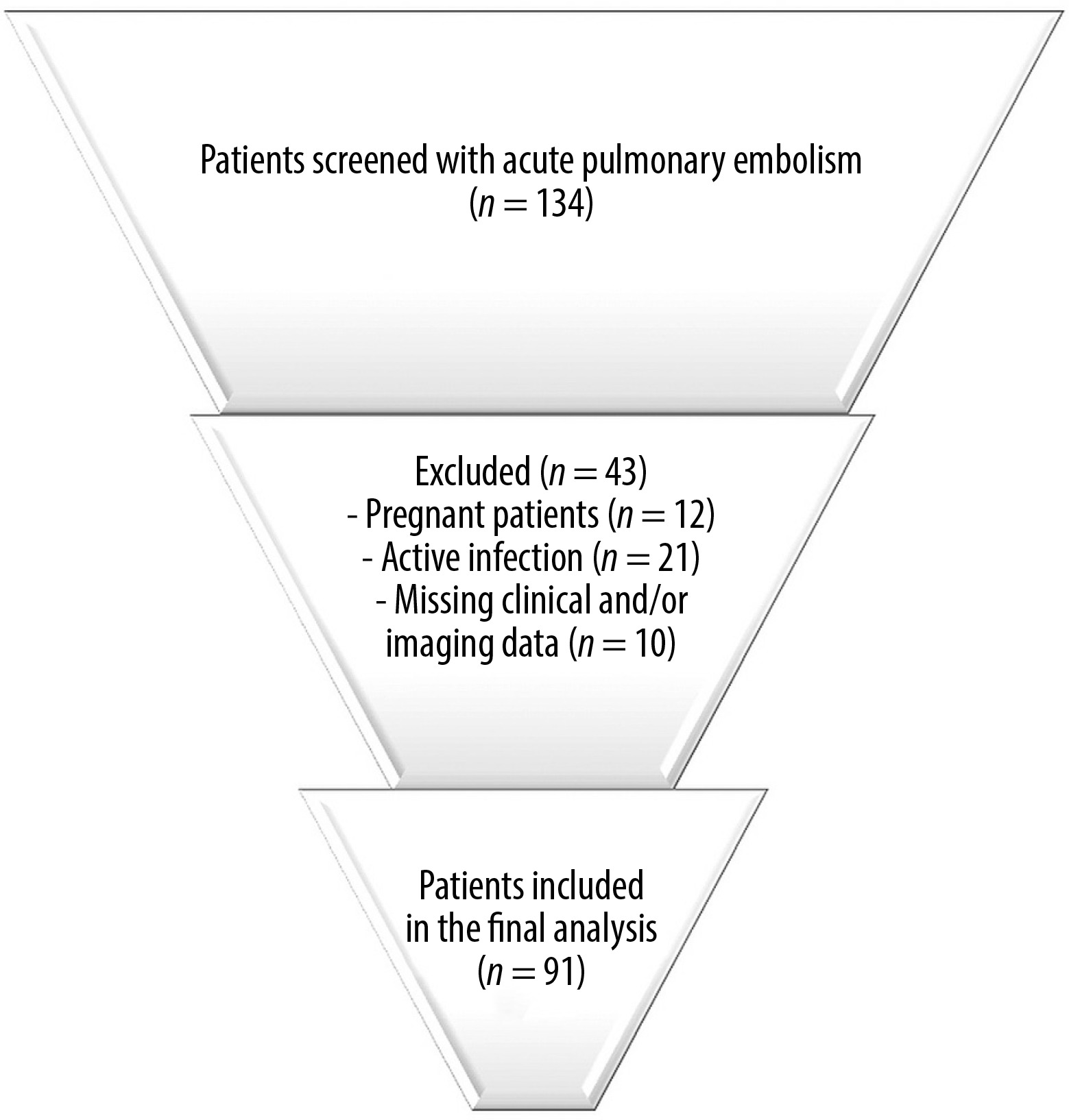
This retrospective study included patients aged ≥ 18 years with a confirmed diagnosis of APE who were followed in the Department of Chest Diseases at Karaman Training and Research Hospital between 1 January 2024 and 30 May 2025. Patient data were retrieved from the hospital’s electronic medical records using the International Classification of Diseases, 10th Revision code I26. A total of 134 patients were initially identified; after applying exclusion criteria, 91 patients with complete data were included in the final analysis. The patient selection process is summarised in Figure 1.
Figure 1
Flow diagram illustrating patient screening, exclusion criteria, and final inclusion in the study
The extracted dataset comprised retrospective clinical and imaging data only and did not contain any personally identifiable information. Therefore, informed consent was not required. The study was conducted in accordance with the principles of the Declaration of Helsinki, and approval was obtained from the Local Scientific Medical Research Ethics Committee of Karamanoğlu Mehmetbey University Faculty of Medicine (decision number 18-2025/18). All personal identifiers were removed to ensure patient confidentiality.
Exclusion criteria included pregnancy, presence of active infection at the time of admission, and incomplete medical or radiological records.
In this study, comparisons were made between CTPA findings, clinical severity indices, and laboratory parameters. Specifically, PESI, sPESI, PLR, SII, QI, RV diameter, and RV/LV ratio were evaluated.
Clinical management and ICU admission criteria
Intensive care unit (ICU) admission was determined by the treating physicians according to institutional clinical practice. Indications for ICU admission included haemodynamic instability (defined as systolic blood pressure < 90 mmHg or the need for vasopressor support), acute respiratory failure requiring high-flow oxygen therapy or ventilatory support, persistent hypoxaemia despite standard oxygen therapy, clinical deterioration during ward follow-up, or the need for close haemodynamic monitoring due to high-risk features. ICU admission was used as a clinically relevant outcome reflecting severe disease and the need for advanced monitoring and treatment.
Clinical severity classification was performed according to ESC guideline-based risk stratification. Patients were categorised as low-risk, intermediate-risk, or high-risk (massive) PE based on haemodynamic status, RV dysfunction findings, and biomarker positivity. High-risk PE was defined by haemodynamic instability or shock. Intermediate-risk PE included normotensive patients with evidence of RV dysfunction and/or elevated cardiac biomarkers, whereas low-risk PE included patients without these features.
PESI and sPESI scores: The PESI was calculated by summing patient age in years with weighted scores assigned to specific predictors when present. Patients in risk classes I and II were classified as low risk, while classes III to V were classified as high risk. The sPESI score was determined based on the presence of the following factors: age > 80 years, history of cancer, chronic cardiopulmonary disease, heart rate > 110 beats/min, systolic blood pressure < 100 mmHg, and oxygen saturation < 90% [11].
Radiological measurements: All imaging assessments were performed by an experienced radiologist blinded to patient clinical data.
– QI: Qanadli obstruction scoring was performed according to the method described by Qanadli et al. [9]. The raw obstruction score was calculated as Σ(n × d), where n represents the number of distal segmental branches affected by the embolus and d represents the degree of obstruction (0 = none, 1 = partial, 2 = complete). The maximal raw score was 40. QI was then expressed as a percentage using the following formula: QI (%) = [Σ(n × d)/40] × 100 (Figure 2).
– Mastora score: The calculation includes 5 mediastinal, 6 lobar, and 20 segmental arteries, scored from 0 to 5 based on the degree of lumen obstruction due to embolism (0 = 0%, 1 = 1-24%, 2 = 25-49%, 3 = 50-74%, 4 = 75-99%, 5 = 100%). A composite obstruction score is calculated by summing the mediastinal, lobar, and segmental arterial components, yielding a maximum possible value of 155 [12]. Mediastinal arteries included the main pulmonary artery, right and left main pulmonary arteries, and interlobar pulmonary arteries (Figure 3).
– RV wall thickness: Measured at the mid-ventricular level in the standard four-chamber view, with magnification applied to exclude papillary muscles from the measurement [13].
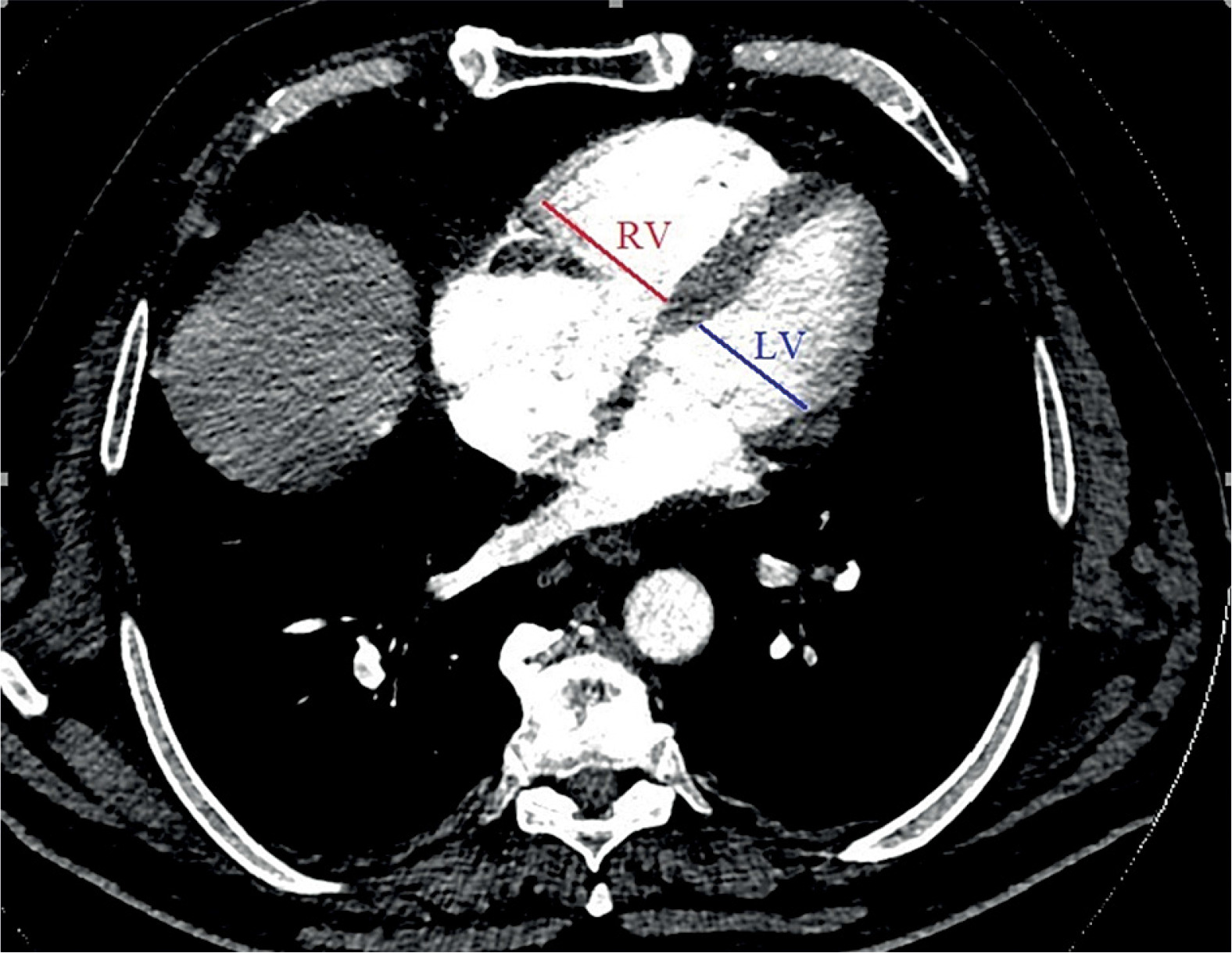
– RV/LV ratio: For radiological measurements, 1-mm slice thickness axial images obtained from CTPA using a 128-slice multidetector CT scanner (General Electric, USA) were analysed. The transverse diameters of the right and left ventricles were measured on axial images from the inner edge of the endocardium at the level where each ventricle appeared widest, typically at the basal ventricular level under the tricuspid and mitral valves, respectively. When the widest diameters of the right and left ventricles were not visible on the same axial slice, measurements were obtained from different slices corresponding to the maximal diameter of each ventricle. The RV/LV ratio was subsequently calculated by dividing the RV diameter by the left ventricular diameter. All measurements were performed by an experienced radiologist who was blinded to the clinical data (Figure 4) [14].
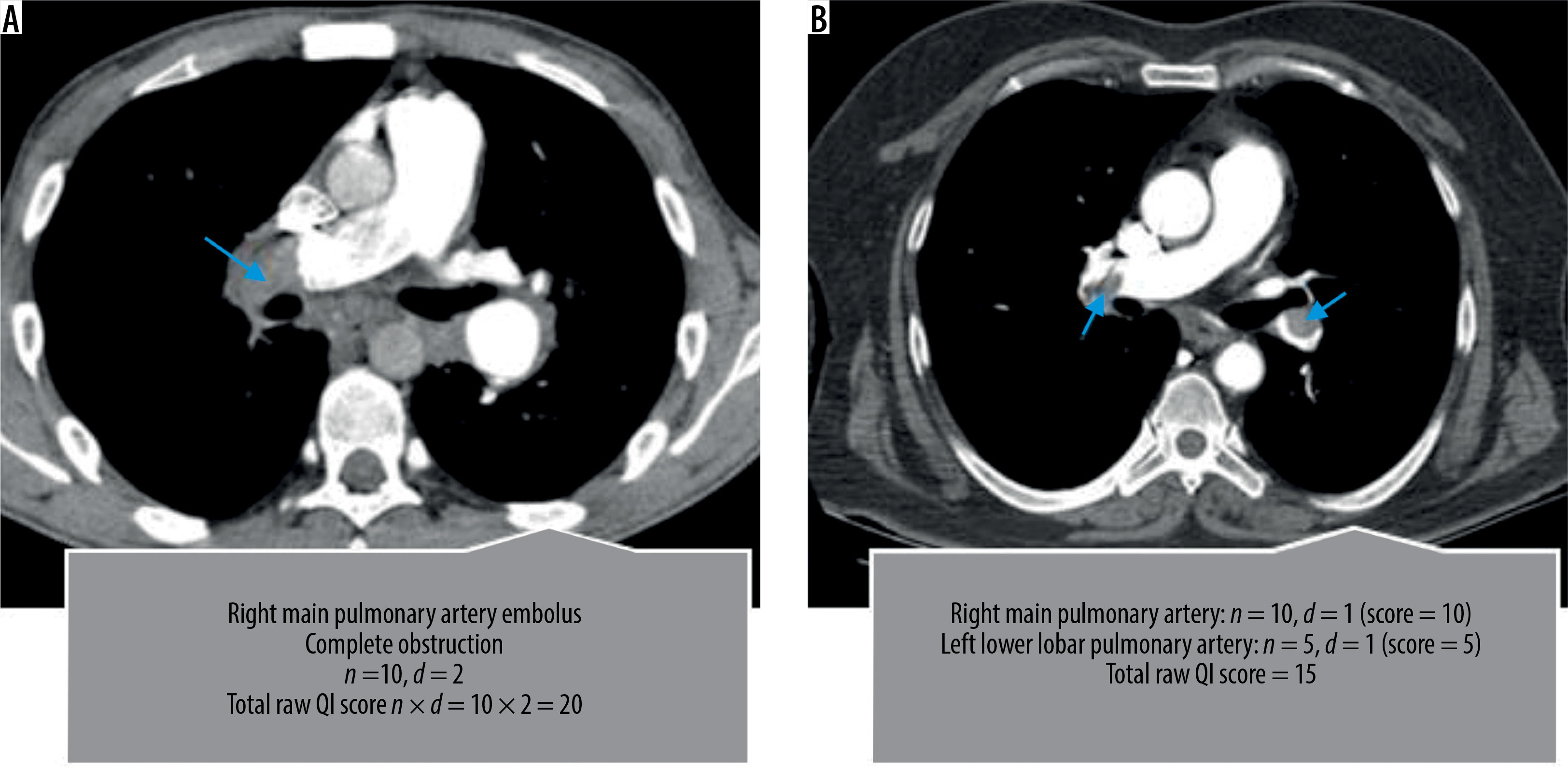
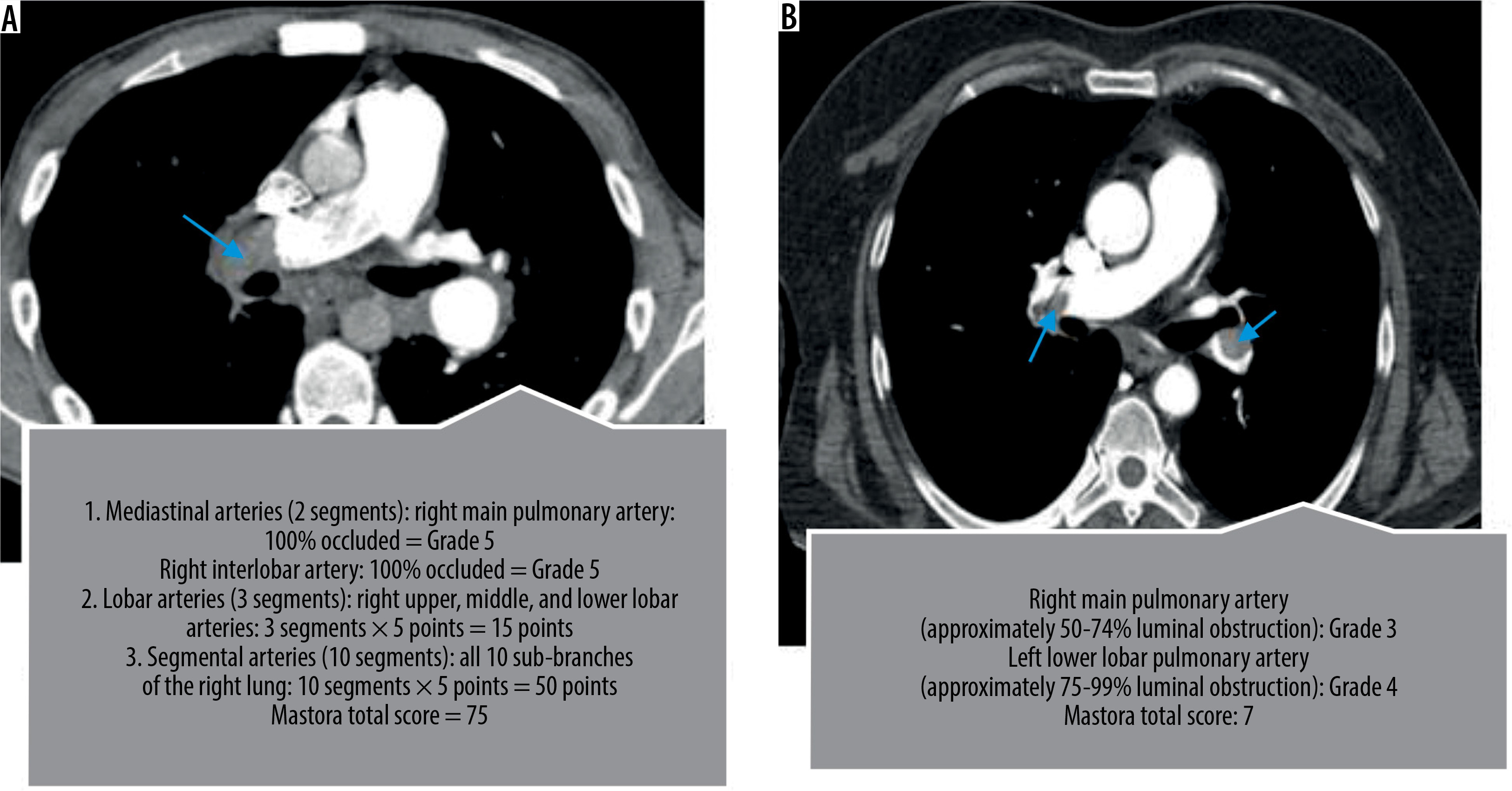
Figure 4
Measurement of right ventricular (RV) and left ventricular (LV) transverse diameters on axial computed tomography pulmonary angiography images used for calculation of the right ventricle/left ventricle ratio. RV and LV diameters were measured at the level of maximal ventricular diameter perpendicular to the long axis of the heart
Statistical analysis
All data were analysed using the SPSS 25.0 software package. The normality of continuous data was assessed using the Kolmogorov-Smirnov and Shapiro-Wilk tests. The Spearman correlation test was used to determine the relationship between continuous variables. The correlation coefficient was interpreted as follows: weak = 0.01-0.49; moderate = 0.50-0.69; strong = 0.70-1.00 [15]. The Mann-Whitney U test was used to compare the distribution of various clinical parameters between patients who were monitored and those who were not monitored in the ICU. The receiver operating characteristic (ROC) analysis was performed to evaluate the intensive care admission status. Positive likelihood ratios were calculated based on sensitivity and specificity values obtained from ROC analysis. In the study, statistical significance was accepted when p < 0.05 in significance tests.
Results
A total of 91 patients were included in the study, of whom 52.7% were female. Most patients were hospitalised in the non-ICU ward (72.5%), whereas 27.5% required ICU care. According to PESI classification, the most common categories were Class I (28.6%) and Class IV (25.3%), followed by Class V (18.7%). Based on disease severity, 62.6% of patients had low-risk, 30.8% had intermediate-risk, and 6.6% had high-risk PE. The most frequent embolus localisation was segmental branches (45.1%), followed by bilateral main pulmonary arteries (25.3%). Deep vein thrombosis (DVT) was detected in 20.9% of patients (Table 1).
Table 1
Demographic, clinical, and radiological characteristics of the patients
A weak negative correlation was observed between RV wall thickness and sPESI score (r = –0.271, p = 0.009). The RV/LV ratio demonstrated weak-to-moderate positive correlations with sPESI (r = 0.239, p = 0.023), PESI class (r = 0.382, p = 0.000), disease severity (r = 0.520, p = 0.000), QI (r = 0.419, p = 0.000), D-dimer (r = 0.239, p = 0.023), and troponin (r = 0.498, p = 0.000).
QI showed significant correlations with PESI class (r = 0.336, p = 0.001), disease severity (r = 0.565, p = 0.000), D-dimer (r = 0.510, p = 0.000), and troponin (r = 0.536, p = 0.000). PESI class was strongly correlated with sPESI (r = 0.874, p = 0.000) and moderately correlated with disease severity (r = 0.656, p = 0.000), D-dimer (r = 0.383, p = 0.000), and troponin (r = 0.601, p = 0.000). A strong correlation was also found between PLR and SII (r = 0.686, p = 0.000), although these biomarkers were not associated with severity indices. Disease severity correlated positively with D-dimer (r = 0.433, p = 0.000) and troponin (r = 0.571, p = 0.000). The relationships between the Mastora score and clinical, radiological, and laboratory variables were evaluated using correlation analysis. The Mastora score correlated with the RV/LV ratio (r = 0.296; p = 0.004), sPESI score (r = 0.333; p = 0.001), PESI class (r = 0.450; p < 0.001), and D-dimer level (r = 0.443; p < 0.001). A moderate positive correlation was found between the Mastora score and disease severity (r = 0.533; p < 0.001). There was a strong positive correlation between QI and the Mastora score (r = 0.946; p < 0.001). In contrast, no statistically significant relationship was found between the Mastora score and RV wall thickness, PLR, and SII (p > 0.05) (Table 2).
Table 2
Spearman correlations between clinical, laboratory, and radiological parameters in patients with pulmonary embolism (N = 91)
| RV wall thickness (mm) | RV/LV | sPESI score | PESI class | Disease severity | QI score | PLR | SII | D-dimer | TROP | Mastora score | ||
|---|---|---|---|---|---|---|---|---|---|---|---|---|
| RV wall thickness (mm) | r | 1,000 | –0.103 | –0.271** | –0.205 | –0.057 | –0.049 | 0.078 | 0.071 | –0.031 | –0.196 | –0.013 |
| p | 0.333 | 0.009 | 0.051 | 0.590 | 0.648 | 0.465 | 0.503 | 0.773 | 0.062 | 0.901 | ||
| RV/LV | r | 1.000 | 0.239* | 0.382** | 0.520** | 0.419** | –0.232* | 0.015 | 0.239* | 0.498** | 0.296** | |
| p | 0.023 | 0.000 | 0.000 | 0.000 | 0.027 | 0.889 | 0.023 | 0.000 | 0.004 | |||
| sPESI score | r | 1.000 | 0.874** | 0.602** | 0.336** | 0.066 | 0.176 | 0.245* | 0.476** | 0.333** | ||
| p | 0.000 | 0.000 | 0.001 | 0.535 | 0.095 | 0.019 | 0.000 | 0.001 | ||||
| PESI class | r | 1.000 | 0.656** | 0.433** | 0.094 | 0.208* | 0.383** | 0.601** | 0.450** | |||
| p | 0.000 | 0.000 | 0.376 | 0.048 | 0.000 | 0.000 | 0.000 | |||||
| Disease severity | r | 1.000 | 0.565** | –0.068 | 0.098 | 0.433** | 0.571** | 0.533** | ||||
| p | 0.000 | 0.521 | 0.355 | 0.000 | 0.000 | 0.000 | ||||||
| QI score | r | 1.000 | –0.094 | 0.140 | 0.510** | 0.536** | 0.946** | |||||
| p | 0.377 | 0.185 | 0.000 | 0.000 | 0.000 | |||||||
| PLR | r | 1.000 | 0.686** | –0.041 | –0.005 | –0.049 | ||||||
| p | 0.000 | 0.700 | 0.963 | 0.646 | ||||||||
| SII | r | 1.000 | –0.009 | 0.196 | 0.171 | |||||||
| p | 0.932 | 0.063 | 0.106 | |||||||||
| D-dimer | r | 1.000 | 0.389** | 0.443** | ||||||||
| p | 0.000 | 0.000 | ||||||||||
| Mastora score | r | 1.000 | ||||||||||
| p |
ICU – intensive care unit, PE – pulmonary embolism, PESI – Pulmonary Embolism Severity Index, PLR – platelet-to-lymphocyte ratio, QI – Qanadli obstruction index, RV/LV – right ventricle/left ventricle ratio, SD – standard deviation, SII – systemic immune-inflammation index, sPESI – simplified Pulmonary Embolism Severity Index, TROP – troponin
Patients admitted to the ICU had significantly higher sPESI scores (p = 0.000), PESI scores (p = 0.000), QI (p = 0.000), and RV/LV ratios (p = 0.000) compared with non-ICU patients. There were no significant differences between ICU and non-ICU groups regarding RV wall thickness (p = 0.142), PLR (p = 0.950), or SII (p = 0.165). When comparing Mastora scores according to ICU admission status, it was found that the Mastora score was significantly higher in the ICU group. The median Mastora score was 19.50 (Q1–Q3: 12.00-38.75) in non-ICU patients, whereas this value was 52.00 (Q1–Q3: 34.00-84.00) in the ICU group (p < 0.001) (Table 3).
Table 3
The relationship between intensive care unit (ICU) admission and the parameters analysed
[i] Mann-Whitney U test was used for comparisons between groups. Bold values indicate statistically significant differences (p < 0.05).
[ii] PE – pulmonary embolism, PESI – Pulmonary Embolism Severity Index, PLR – platelet-to-lymphocyte ratio, Q1 – first quartile, Q3 – third quartile, QI – Qanadli obstruction index, RV/LV – right ventricle-to-left ventricle ratio, SII – systemic immune-inflammation index, sPESI – simplified Pulmonary Embolism Severity Index
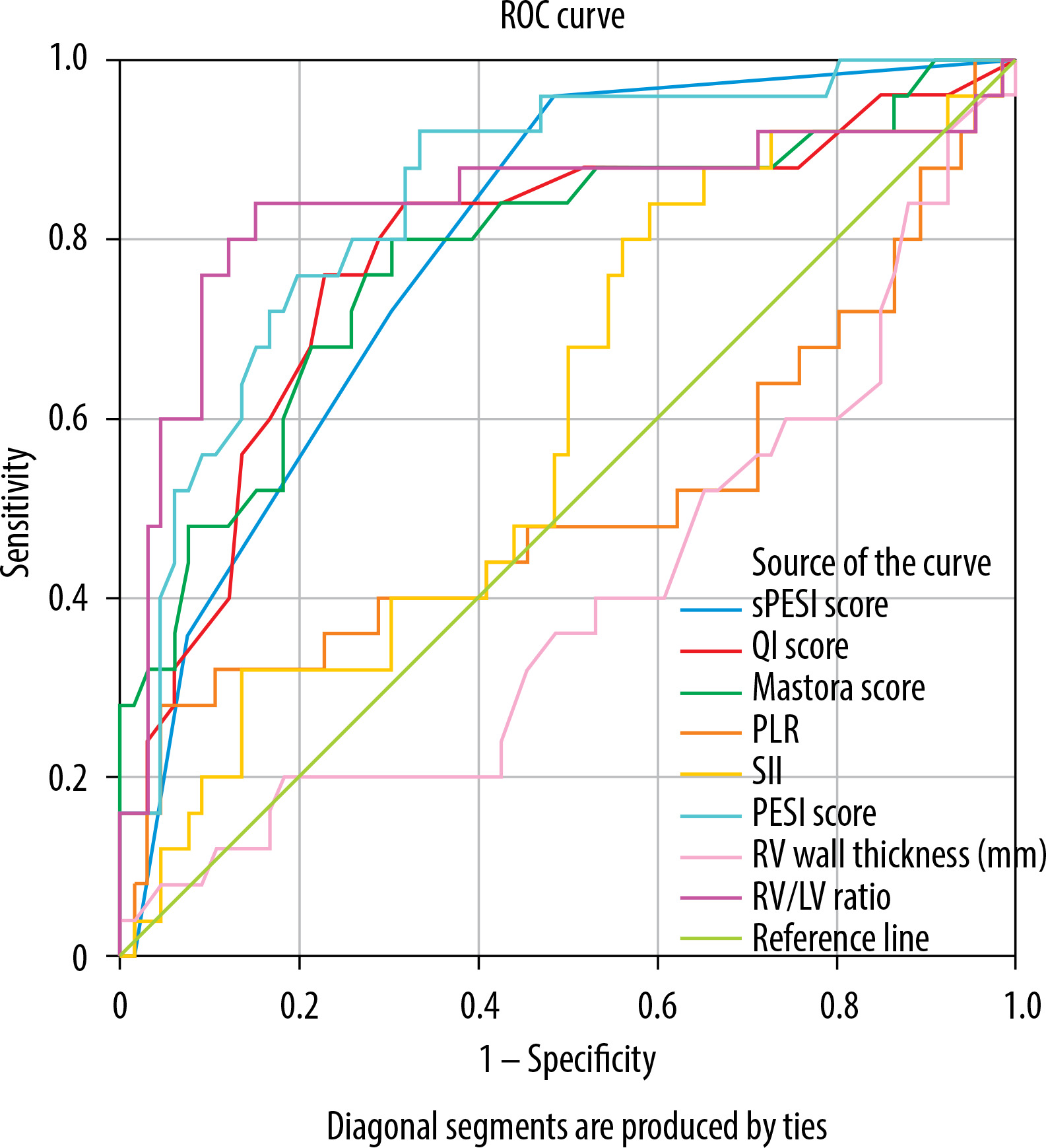
ROC analysis demonstrated that PESI had the highest discriminatory power for predicting ICU admission (area under the curve, AUC = 0.849, 95% CI: 0.762-0.936; p = 0.000), followed by RV/LV ratio (AUC = 0.838) and sPESI score (AUC = 0.791). QI also demonstrated significant predictive ability (AUC = 0.782, p = 0.000). In contrast, PLR (AUC = 0.504), SII (AUC = 0.595), and RV wall thickness (AUC = 0.400) showed no predictive value (p > 0.05). ROC curves of sPESI, PESI, QI, Mastora, PLR, RV wall thickness, RV/LV ratio, and SII scores for predicting ICU admission are shown in Figure 5.
Figure 5
Receiver operating characteristic (ROC) curves of the simplified Pulmonary Embolism Severity Index (sPESI), Pulmonary Embolism Severity Index (PESI), Qanadli obstruction index (QI), Mastora score, platelet-to-lymphocyte ratio (PLR), right ventricular (RV) wall thickness, right ventricle/left ventricle (RV/LV) ratio, and systemic immune-inflammation index (SII) for intensive care unit admission
Optimal cut-off values were as follows:
sPESI ≥ 0.5: sensitivity 96%, specificity 51.5%, positive likelihood ratio (LR+) = 1.98;
PESI ≥ 79.5: sensitivity 96%, specificity 53%, LR+ = 2.04;
QI ≥ 9.5: sensitivity 84%, specificity 57.6%, LR+ = 1.98;
RV/LV ≥ 1.0: sensitivity 88%, specificity 62.1%, LR+ = 2.32;
Mastora score ≥ 22.5: sensitivity 84%, specificity 47.6%, LR+ = 1.98.
Among all parameters, PESI and RV/LV ratio emerged as the strongest predictors of ICU admission (Table 4).
Table 4
Receiver operating characteristic (ROC) values of the simplified Pulmonary Embolism Severity Index (sPESI), Pulmonary Embolism Severity Index (PESI), Qanadli obstruction index (QI), platelet-to-lymphocyte ratio (PLR), and systemic immune-inflammation index (SII) scores for intensive care unit admission
Discussion
APE may present incidentally or manifest as sudden death, making rapid and accurate assessment of disease severity essential to guide timely treatment decisions. Treatment strategies are determined according to risk classification and clinical characteristics [16], and early risk stratification at presentation is critical for appropriate patient management. In this study, we evaluated the associations between clinical severity indices (PESI, sPESI), laboratory parameters (PLR, SII), and radiological measurements (QI, RV wall thickness, RV/LV ratio) in the context of prognostic stratification.
PLR and SII are inexpensive and easily obtainable indices reflecting systemic inflammation. Previous studies have reported elevated PLR and SII values in patients with DVT compared with controls [17,18]. In APE, platelet and leukocyte activation contributes to a pro-inflammatory state, and these indices have been linked to prognosis and disease severity [19,20]. However, in our study, no significant correlations were observed between PLR or SII and clinical severity indices, obstruction scores, or ICU admission. These results do not support prior reports suggesting a prognostic role for PLR and SII, and larger multicentre studies are warranted to clarify these associations.
Obstruction scores have been extensively studied in PE. QI, which quantifies clot burden on CTPA, has been frequently cited and applied in clinical studies [9]. Although some reports suggested limited prognostic utility [21,22], most studies have shown that greater clot burden is associated with increased pulmonary vascular resistance, RV strain, and even short-term mortality [16,23,24]. Collomb et al. demonstrated higher QI scores in severe PE, while Yu et al. found that obstruction indices effectively differentiated between sub-massive and massive PE [25]. In our study, QI correlated with PESI and clinical severity, and patients requiring ICU admission had significantly higher QI scores. ROC analysis showed that a QI ≥ 9.5 provided moderate predictive ability (AUC = 0.782), comparable to PESI and sPESI. These findings support the role of QI as a practical prognostic marker in APE. In addition to QI, the Mastora score was evaluated as an alternative CT-based measure of embolic burden. In our study, the Mastora score demonstrated significant correlations with disease severity, PESI, sPESI, RV/LV ratio, and D-dimer levels, and was significantly higher in patients requiring intensive care admission. Notably, a very strong correlation was observed between the Mastora score and QI, suggesting substantial agreement between these two obstruction scoring systems. These findings indicate that both indices reflect embolic burden reliably; however, given its relative simplicity and wider clinical use, the QI may be more practical for routine risk stratification.
D-dimer is an established diagnostic biomarker in PE, but its relationship with clot burden has been less frequently explored. Our findings revealed significant correlations between D-dimer and QI, consistent with prior reports [26]. Similarly, troponin elevation, reflecting RV strain, has been linked to adverse outcomes. We observed strong correlations between troponin and QI, further supporting the value of combining imaging and biochemical markers in risk assessment [21,24].
The RV/LV ratio, which can be rapidly assessed on CTPA, is an established marker of poor prognosis and is included in the American Heart Association and ESC guidelines. A meta-analysis demonstrated that an RV/LV ratio > 1.0 was associated with a 2.5-fold increase in all-cause mortality [27-29]. In our study, the RV/LV ratio showed significant correlation with QI, PESI, sPESI, disease severity, and troponin, confirming its usefulness as an independent risk stratification parameter, consistent with previous literature [2,30]. In the present study, RV/LV measurements were obtained from routine non-electrocardiogram-gated axial CTPA images rather than dedicated cardiac reformatted views. Therefore, cardiac cycle variability and geometric differences in RV morphology may have influenced the measurements. However, this approach reflects routine emergency radiology practice and has been widely used in previous PE studies.
In contrast, RV wall thickness showed only a weak negative correlation with sPESI and did not differ significantly between ICU and non-ICU patients. These findings diverge from recent reports indicating prognostic value [13]. Variability in measurement techniques, including the phase of the cardiac cycle during CT acquisition, may explain these discrepancies. We suggest that RV wall thickness requires further validation in larger cohorts and under standardised imaging conditions before it can be reliably used as a prognostic marker.
Overall, PESI and RV/LV ratio emerged as the strongest predictors of ICU admission, followed by sPESI and QI. The high predictive performance of PESI for ICU admission may partly reflect the overlap between PESI components and ICU admission criteria, particularly haemodynamic instability, hypoxaemia, and cardiopulmonary comorbidities. In contrast, cell-based inflammatory indices (PLR, SII) and RV wall thickness did not demonstrate significant predictive value. This study is one of the few to compare clinical severity indices with both laboratory and radiological parameters, and we believe it contributes novel insights to the literature.
Strengths and limitations
The main limitations of this study are its retrospective and single-centre design and limited sample size. In addition, although artificial intelligence-based clot burden quantification represents a promising emerging approach, the implementation and validation of such tools require dedicated software infrastructure and an additional validation framework, which were not available within our institutional picture archiving and communication system. Therefore, established conventional CTPA-derived metrics were used. These limitations can be overcome with multicentre studies with larger sample sizes.
Conclusions
In this study, PESI and the RV/LV ratio emerged as the strongest predictors of ICU admission, and they were significantly associated with ESC-based clinical risk stratification categories in APE. QI also demonstrated significant associations with clinical and biochemical markers of severity and provided reliable discriminatory performance in predicting ICU admission. In contrast, inflammatory indices such as PLR and SII, as well as RV wall thickness, showed no meaningful prognostic value. Overall, our findings highlight the utility of integrating clinical severity scores with imaging-based markers – particularly RV/LV ratio and QI – for early risk stratification and effective management of patients with APE.