

Introduction
The menisci are fibrocartilaginous tissues essential in maintaining proper biomechanics at the knee. They serve many purposes, including weight distribution via hoop stress and shock absorption [1]. The medial and lateral menisci are distinct in their shape, mobility, and surface area coverage, in part due to the inherent differences between the medial and lateral tibiofemoral compartments [2].
The medial and lateral menisci have been divided into three parts and categorized into zones [2-4]. Much of the biomechanical stability is provided by the posterior third of each meniscus [2,5]. Meniscus tears, both traumatic and degenerative, occur in different patterns and are categorized as horizontal, vertical, radial, or complex. Although tears can occur at any location, the posterior horn of the medial meniscus is the most frequent site of tears [6].
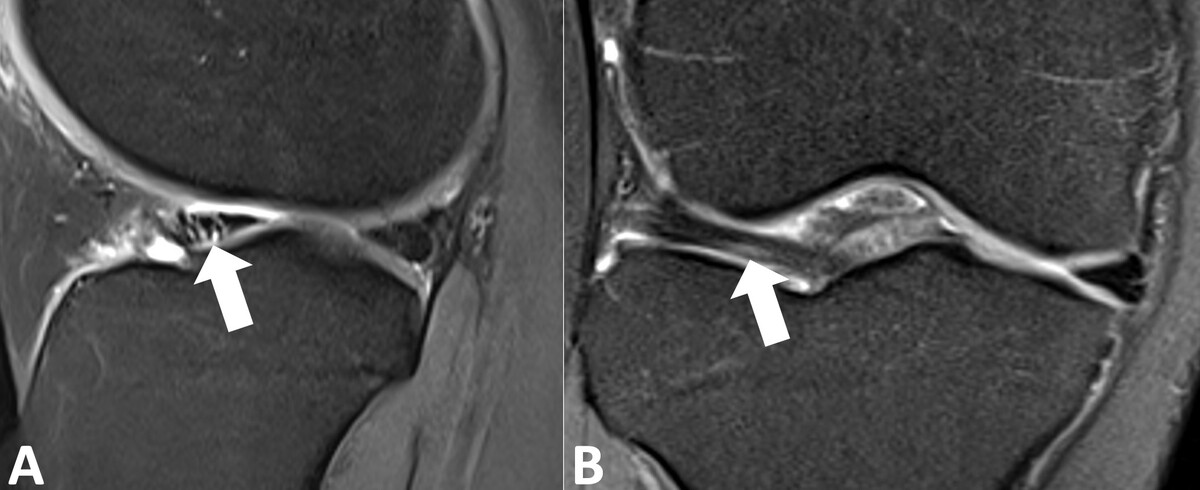
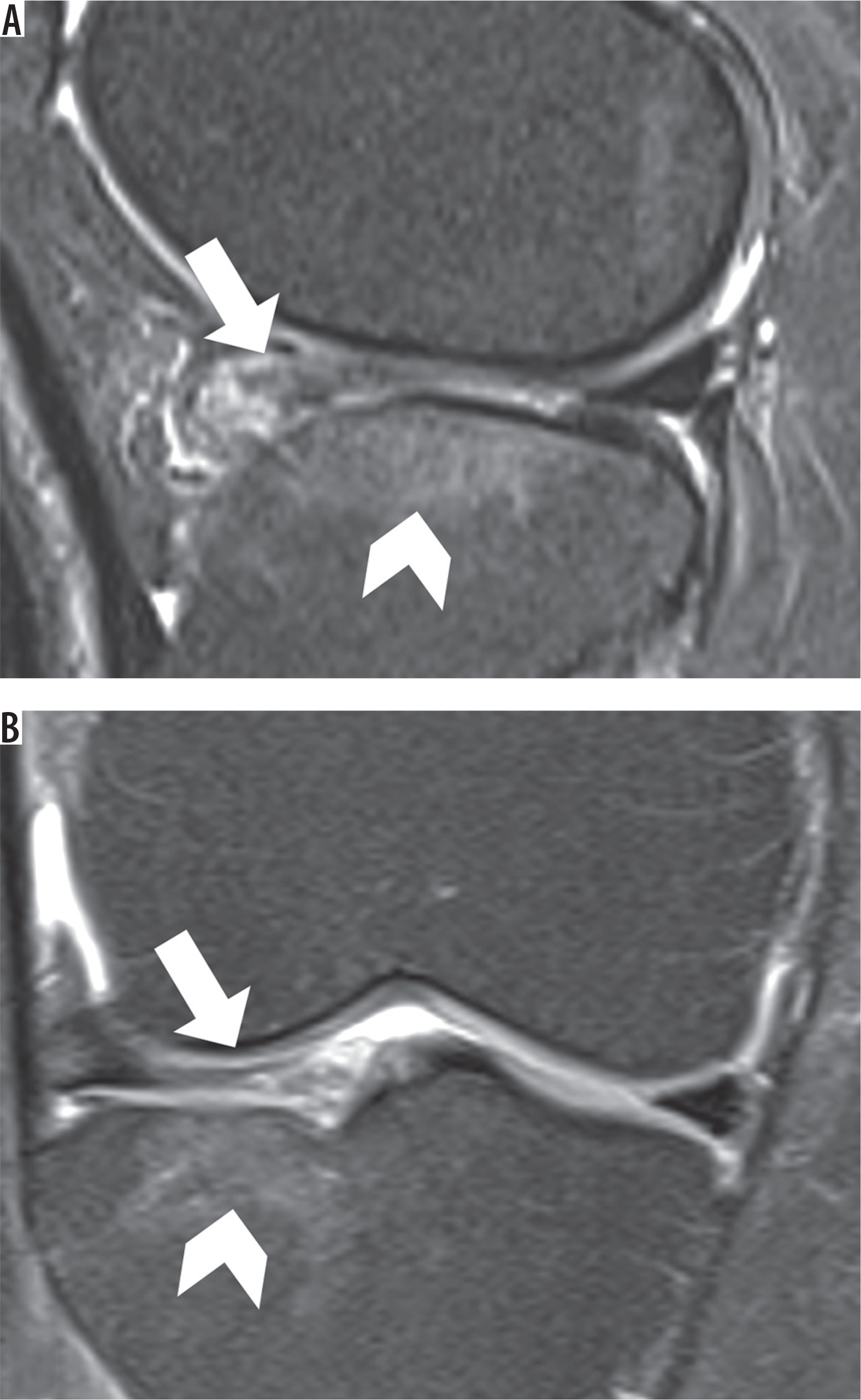
Tears of the anterior horn of the lateral meniscus (AHLM) are infrequent and have been sporadically described in both the radiology and orthopedic litera-ture [7-15]. Much of the radiology literature has focused on mimics and/or false positives of AHLM tears on magnetic resonance imaging (MRI) [13-17] (Figure 1). However, AHLM tears are clinically important, as they result in marked increases in both medial and lateral tibiofemoral contact pressures, with return to physiologic pressures following surgical repair [18].
Figure 1
Sagittal proton density fat-suppressed (A) and coronal proton density fat-suppressed (B) magnetic resonance images of the left knee in a 19-year-old male patient with pain demonstrate focal high proton density fat-saturated signal within the anterior horn of the lateral meniscus (arrows). Meniscus morphology is preserved. These findings are most consistent with a pseudotear, particularly given the absence of corresponding lateral joint tenderness on physical examination
The purpose of this retrospective descriptive study was to identify patterns of AHLM tears on MRI and describe associated findings, including presence of intrameniscal/parameniscal cysts, meniscal flap formation, concurrent ligamentous injuries, and surgical management. A secondary aim was to examine potential relationships between AHLM tear morphology, patient demographics, and surgical treatment.
Material and methods
Study cohort
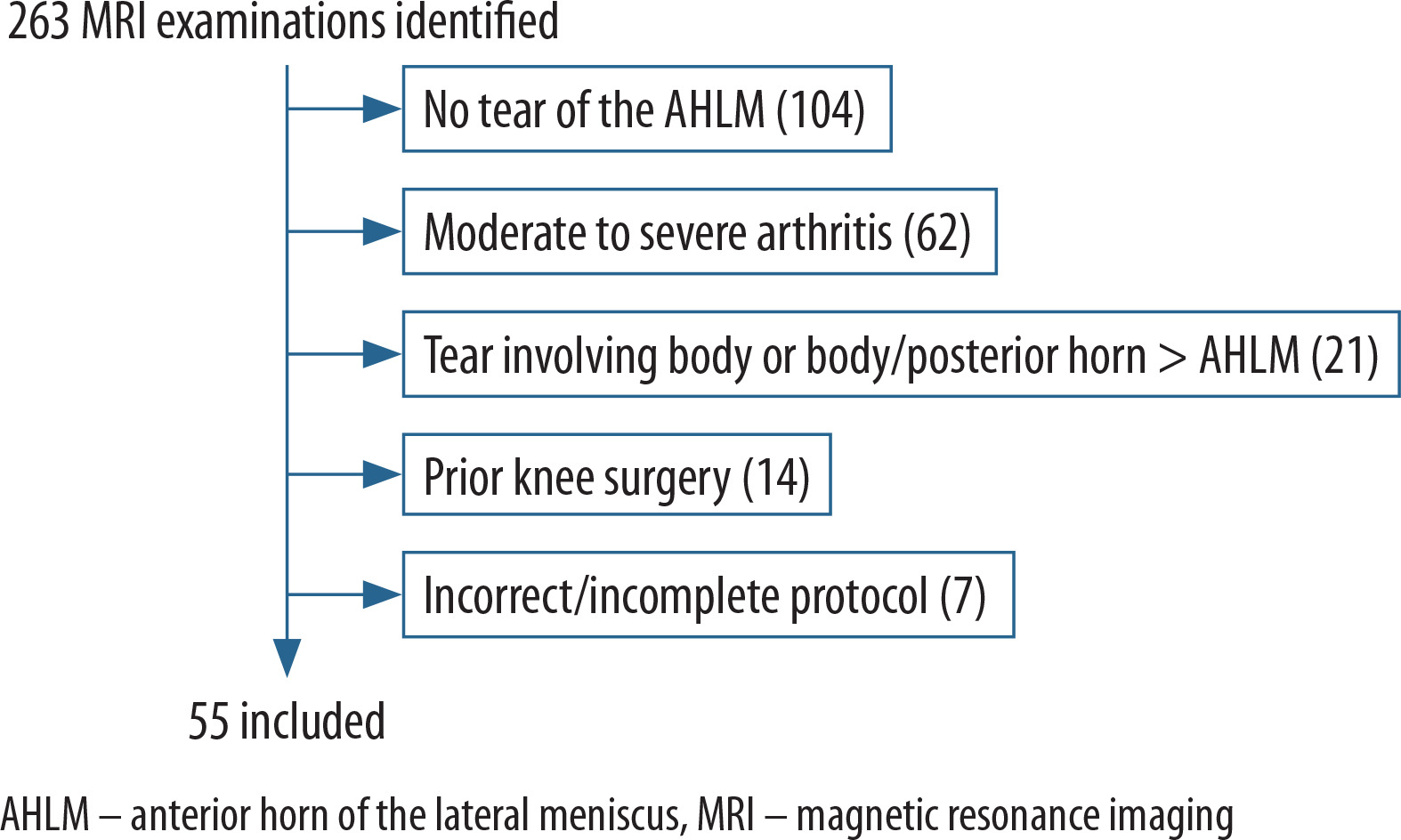
This is a Health Insurance Portability and Accountability Act-compliant, Institutional Review Board-approved retrospective study performed with waived informed consent. A database search of imaging reports for knee MRI over a 6-month period (1/1/2023-7/1/2023) using the M-power search engine was performed using the search term “anterior horn” and “knee.” Inclusion criteria were: (1) presence of a tear of the AHLM/Cooper’s classification zone D of the meniscus on knee MRI (Figure 2); (2) age 12-70 years. Exclusion criteria were: (1) no tear of AHLM; (2) incorrect or incomplete MRI protocol performed; (3) prior knee surgery; (4) high-grade partial- or full-thickness chondral loss involving 50% or more of the central weightbearing portions of the tibial and/or femoral articular surfaces; (5) tears involving a greater portion of the body than the anterior horn; or (6) tears involving the anterior horn, body, and posterior horn of the lateral meniscus.
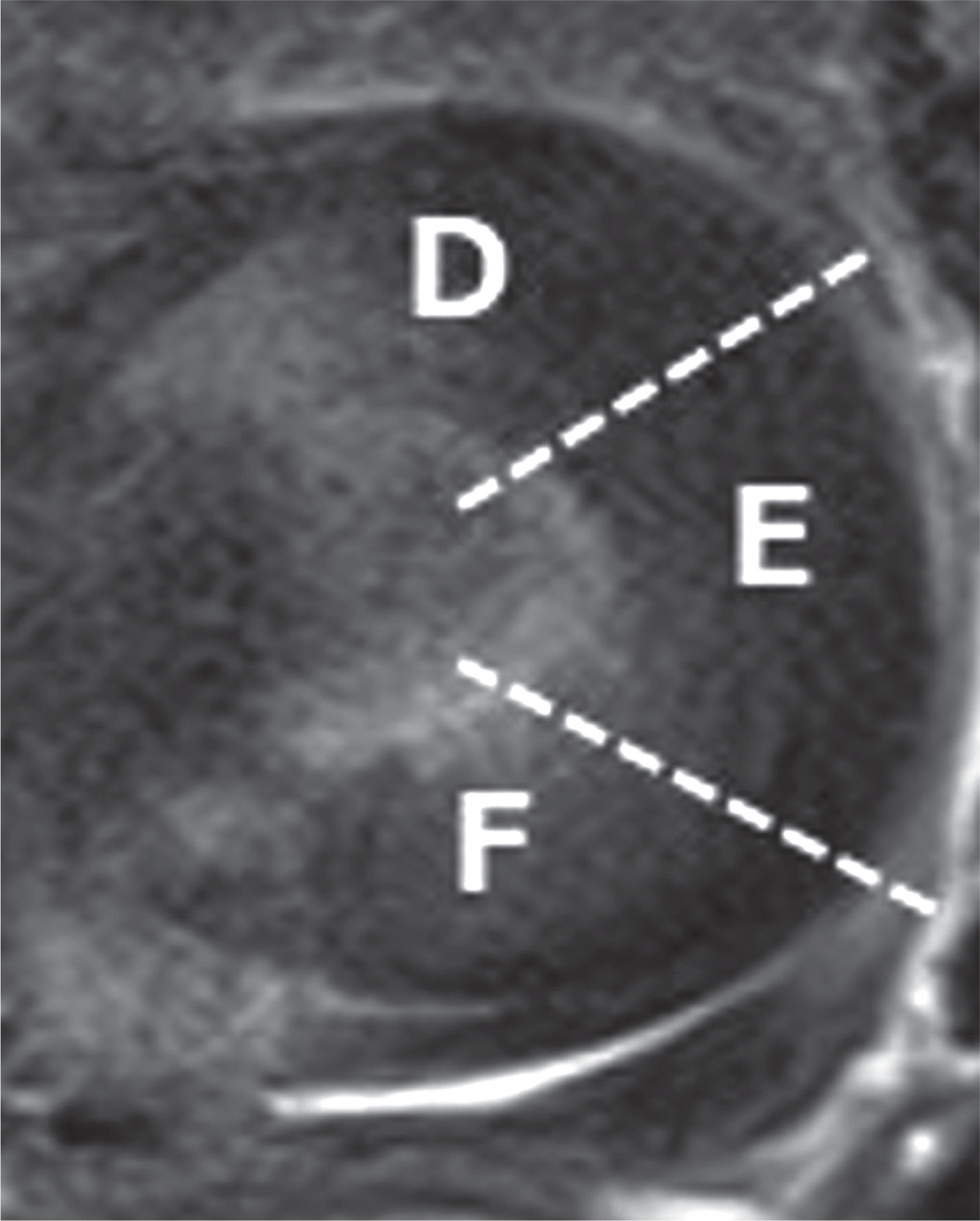
Image acquisition
MRI examinations were performed on 1.5-T and 3.0-T MRI scanners (Signa 1.5 T, Optima 450w 1.5 T, Architect 3.0 T; GE Medical Systems, Waukesha, WI, USA; Aera 1.5 T, Skyra 3.0 T, Vida 3.0 T, and MAGNETOM Prisma 3.0 T; Siemens Healthineers, Erlangen, Germany). Patients underwent a standard institutional sports protocol knee MRI, which consists of a sagittal and coronal proton density (repetition time [TR]/echo time [TE] range, > 2000/20-35), sagittal and coronal proton density fat-saturated (PDFS) (TR/TE range, > 2000/20-35), coronal T1 (TR/TE range, 400-800/minimum) and axial PDFS (TR/TE range, > 2000/20-35). Additional parameters included 14-16 field of view, 256 × 256 matrix, and 3.0 mm slice thickness.
Image interpretation and data collection
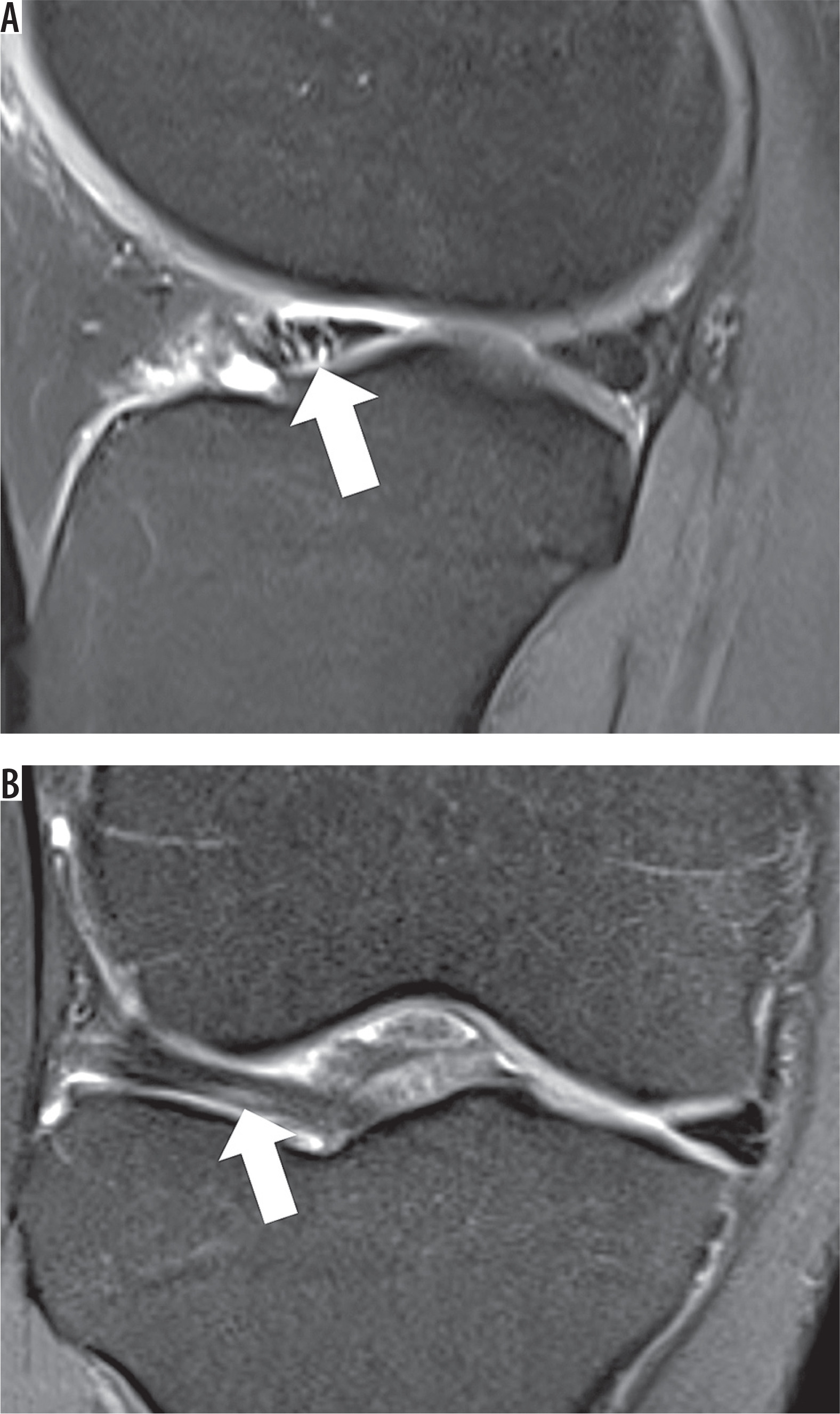
Two musculoskeletal fellowship-trained radiologists with four and ten years of post-training experience, respectively (authors PJW and SGS), performed reviews of the MRI examination images in consensus. Meniscus tears were defined with reference to the International Society of Arthroscopy, Knee Surgery and Orthopaedic Sports Medicine classification [19]. A horizontal tear was defined as a hyperintense meniscal signal parallel to the tibial plateau extending to at least one articular surface or the central free edge on at least two slices in any plane. A vertical tear was defined as a hyperintense meniscal signal perpendicular to the tibial plateau and parallel to the long axis of the meniscus extending to at least one articular surface on at least two slices in any plane. A radial tear was defined as a hyperintense meniscal signal perpendicular to the tibial plateau and transecting the circumferential fibers, extending from the inner margin towards the periphery and/or demonstrating loss of normal triangular morphology of the meniscus (Figure 3). A complex or macerated tear was defined as a combination of two or more tear patterns with marked disruption of the normal triangular meniscal morphology (Figure 4). As this was a retrospective descriptive study, arthroscopic correlation could not be used to confirm tear diagnosis.
Figure 3
Sagittal proton density fat-suppressed (A) and coronal proton density fat-suppressed (B) magnetic resonance images of the left knee in a 15-year-old male patient with pain demonstrates disruption of normal meniscus morphology along the inner margin of the anterior horn of the lateral meniscus (arrows) compatible with a radial tear
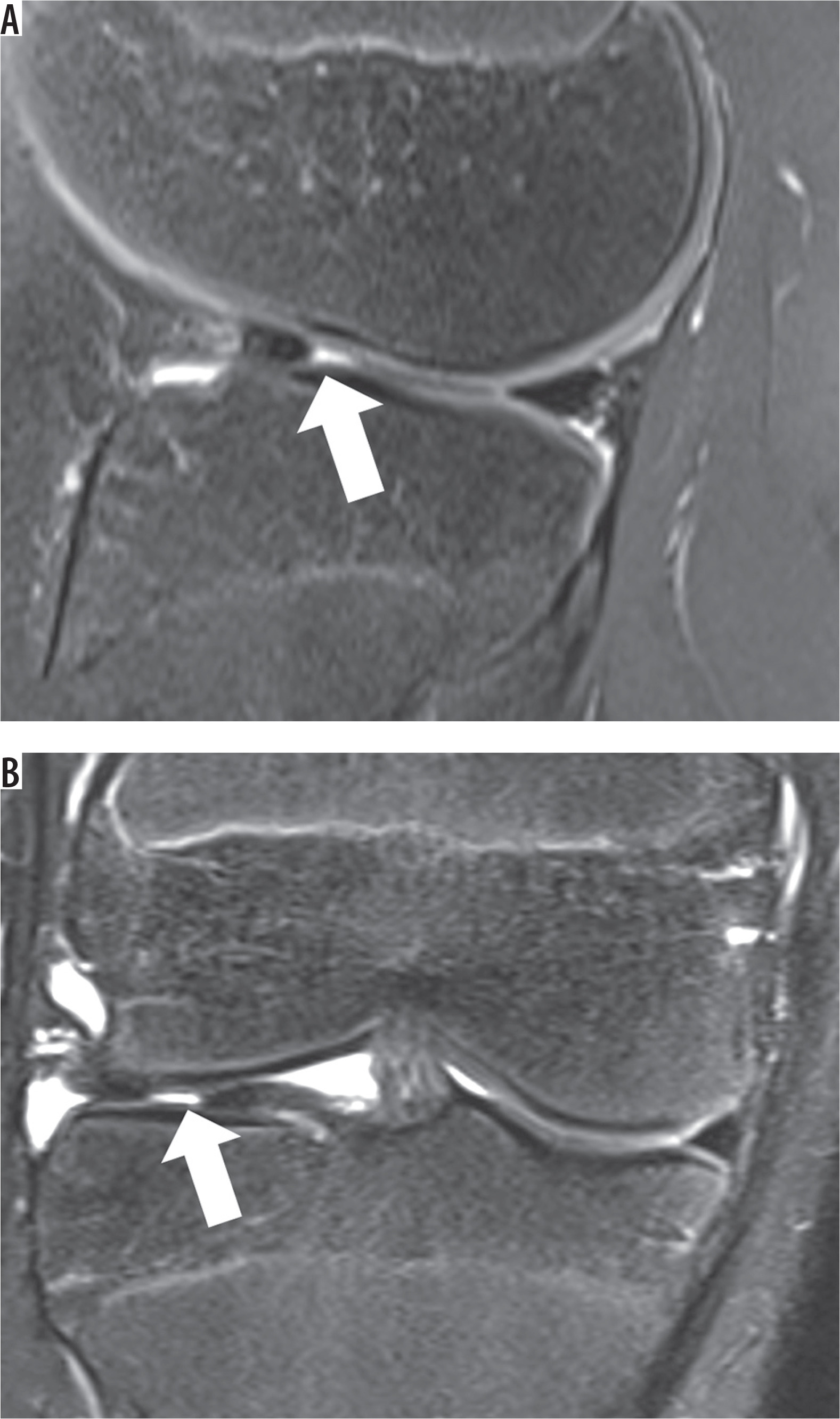
Figure 4
Sagittal proton density fat-suppressed (A) and coronal proton density fat-suppressed (B) magnetic resonance images of the right knee in a 67-year-old female patient with pain demonstrate diffuse intermediate and high proton density fat-saturated signal and an amorphous anterior horn of the lateral meniscus (arrows) consistent with a complex/macerated tear. Reactive bone marrow edema-like signal along the lateral tibial plateau relating to chondral wear and osseous stress reaction (chevron)
Morphology of tear (complex/macerated, radial, vertical and horizontal), discoid morphology (yes/no), presence of meniscal flap (yes/no), and presence of intrameniscal/parameniscal cysts (yes/no) were collected and recorded. Concurrent ligamentous injury (anterior cruciate ligament, posterior cruciate ligament, medial collateral ligament, lateral collateral ligament) was also recorded if present. Subsequent chart review was performed for each knee MRI reviewed. Age was collected as a quantitative continuous variable and biologic gender as a categorical nominal variable. If a patient underwent surgical management within six months after the MRI, the type of surgery was also recorded.
Statistical analysis
Categorical variables were summarized as frequency (percentage) and continuous variables as median with interquartile range (IQR). Patient characteristics were compared across tear morphology groups using the Kruskal-Wallis test for continuous variables and Fisher’s exact test for categorical variables. The 95% confidence intervals (CIs) for the proportions of surgery and ligamentous injury were estimated using the exact Clopper-Pearson method. Adjustment for multiple testing was performed using the Holm method. A two-sided p-value < 0.05 was considered statistically significant. Statistical analyses were performed using SAS version 9.4 (SAS Institute, Cary, NC).
Results
The initial database search yielded 263 knee MRIs. 208 cases were excluded based on the exclusion criteria; the remaining 55 cases met the criteria for our study (Figure 5). There were 27 male and 28 female patients. The median age was 54.0 years (IQR: 40.0-64.0; range: 15-69 years). Tear morphologies were categorized as: 12 complex/macerated (12/55, 21.8%), 12 radial (12/55, 21.8%), 8 vertical (8/55, 14.6%), and 23 horizontal (23/55, 41.8%). Tears that had a meniscal flap component constituted 14.6% of all tears (8/55) and included one complex/macerated tear (1/55, 1.8%), three radial tears (3/55, 5.5%), one vertical tear (1/55, 1.8%), and three horizontal tears (3/55, 5.5%).
Eighteen tears (18/55, 32.7%) had either an intrameniscal/parameniscal cyst including four complex/macerated tears (4/55, 7.3%), three radial tears (3/55, 5.5%), three vertical tears (3/55, 5.5%), and eight horizontal tears (8/55, 14.6%). One radial tear had a discoid morphology of the lateral meniscus. Sixteen of the horizontal tears (16/55, 29%) had extension to the anterior horn/body junction with partial extension into the body/zone E; however, the majority of the tear was present in the anterior horn/zone D.
There was a statistically significant difference in the prevalence of ligamentous injury across tear morphology groups (adjusted p = 0.032) (Table 1). AHLM tears with concurrent ligamentous injury were as follows: two of the twelve (2/12, 16.7%) complex/macerated tears had concurrent acute sprains (one anterior cruciate ligament (ACL) and one ACL plus medial collateral ligament). Five of the twelve (5/12, 41.7%) radial tears were associated with ligamentous injuries: four ACL (2 acute, 2 chronic) and one ACL plus posterior cruciate ligament (PCL) plus patellar tendon rupture (acute). Two of the eight (2/8, 25%) vertical tears were associated with PCL sprains (1 acute, 1 chronic). Three of the eight (3/8, 37.5%) horizontal tears were associated with one ACL sprain and two PCL sprains (all acute).
Table 1
There was a statistically significant difference in the percentage of surgery among the morphology groups (p = 0.008). The group with the highest percentage of surgery in our cohort was the radial morphology group. There was a statistically significant difference in the percentage of ligamentous injury among the morphology groups (p = 0.032). The group with the highest percentage of ligamentous injury in our cohort was the radial morphology group
| Characteristic | Tear morphology | |||||
|---|---|---|---|---|---|---|
| Horizontal N = 231 | Macerated N = 121 | Radial N = 121 | Vertical N = 81 | Raw p-value2 | Adj. p-value3 | |
| Ligamentous injury | 1 (4.3) | 1 (8.3) | 5 (41.7) | 0 (0.0) | 0.017 | 0.032 |
| Surgery | 1 (4.3) | 2 (16.7) | 7 (58.3) | 2 (25.0) | 0.002 | 0.008 |
Operative management within six months was identified in the medical records of 13 patients (13/55, 23.6%) in the overall cohort. Of these, five patients had surgery that did not involve the AHLM. Eight patients (8/55, 14.6%) underwent surgery which involved the AHLM. Five of these eight patients (5/8, 62.5%) had radial tears and were all male, with a median age of 27.2 (age range 15-63). Of the radial tears, all underwent partial meniscectomy and two concurrently underwent ACL reconstruction. One patient with complex/macerated tear (age 66), one with vertical tear (age 64), and one with horizontal tear (age 48) each underwent partial meniscectomies, and all were female. There was a statistically significant difference in surgical management across tear morphology groups (adjusted p = 0.008), with the highest proportion observed in the radial tear group (7/12, 58.3%; 95% CI: 27.7-84.8%) (Table 1).
Age distribution differed significantly across tear morphology groups (adjusted p = 0.032), with complex/macerated tears occurring more frequently in older patients (Table 2). Radial tears demonstrated the lowest median age among the tear morphology groups (Table 2). Gender distribution also differed significantly across tear morphology groups (adjusted p = 0.018), with radial tears occurring predominantly in male patients (Table 2).
Table 2
Patient characteristics presented according to tear morphology. Age distribution differed significantly among the morphology groups (p = 0.032). The radial group had the lowest median age, while the macerated and horizontal groups had the highest. There was a statistically significant difference in the percentage of males among the morphology groups (p = 0.018). All but one (11/12 or 91.2%) patient in the radial group were male, while at least 1/3 of patients in the other groups were male
| Characteristic | Tear morphology | |||||
|---|---|---|---|---|---|---|
| Horizontal N = 231 | Macerated N = 121 | Radial N = 121 | Vertical N = 81 | p-value2 | Adj. p-value3 | |
| Age | 58 (46, 65) | 60 (53, 66.5) | 33 (23.5, 57.5) | 46 (44, 52) | 0.016 | 0.032 |
| Gender | ||||||
| Female | 15 (65.2) | 8 (66.7) | 1 (8.3) | 4 (50) | 0.006 | 0.0180 |
| Male | 8 (34.8) | 4 (33.3) | 11 (91.7) | 4 (50) | ||
Discussion
In this retrospective MRI-based study, AHLM tear morphology demonstrated distinct demographic and clinical patterns. There were significant differences in age and gender distribution across tear morphology groups, with radial tears occurring more frequently in younger male patients and complex/macerated tears occurring more frequently in older individuals. Among patients who underwent operative intervention, surgery was most commonly performed in the radial tear group, and this morphology demonstrated the highest prevalence of concomitant ligamentous injury. Horizontal tears were the most common tear morphology and most frequently associated with intrameniscal/parameniscal cyst formation, but this was not a statistically significant relationship.
Tears of the AHLM are rare. Metcalf et al. [6] identified 63 tears in zone D of the lateral meniscus at arthroscopy from a total of 1485 tears in 1370 patients (63/1485, 4.2%). Shepard et al. [7] found 76 patients diagnosed with anterior horn tears of the medial and lateral menisci in their consecutive review of 947 MRI reports (76/947, 8%). However, when correlating MRI findings with intra-operative findings in patients who underwent arthroscopy (31/76, 41%), only 8 out of 31 tears (26%) represented true tears at the anterior horns [7]. The authors concluded that increased signal intensity at the anterior horns on MRI, especially at the lateral meniscus, was not clinically significant.
In keeping with Shepard et al. [7], much of the radiology literature describes the AHLM as a potential pitfall for over-diagnosing a meniscus tear. This is because the AHLM serves as a direct attachment for several ligaments – including the anterior lateral meniscus root ligament, transverse geniculate ligament, and lateral oblique ligament – and lies adjacent to the attachment of the anterior cruciate ligament at the tibial plateau [13-17,20]. It is therefore not uncommon to note a hyperintense signal on fluid-sensitive sequences at the AHLM, with a “speckled” or “striated” appearance which may be misdiagnosed as a tear (Figure 1).
When present, AHLM tears lead to a marked increase in medial and lateral tibiofemoral contact pressures at the knee [11,18]. This may be partly due to the unique properties of the lateral meniscus at the lateral tibiofemoral compartment, including greater coverage of surface area and increased mobility [2]. As a result, the lateral meniscus bears most of the load at the lateral tibiofemoral compartment, while the load is shared between the medial meniscus and exposed cartilage at the medial tibiofemoral compartment [21]. Surgical repair of AHLM tears restores the tibiofemoral contact forces to physiologic levels [18]. Thus, when possible, these tears are surgically managed to decrease long-term patient morbidity and delay the onset of osteoarthritis [11,12].
Several orthopedic case series have described the clinical and imaging features of patients with AHLM tears. Choi et al. [8] retrospectively evaluated 14 young male soccer players (mean age 20.2 years) with isolated AHLM tears. In their study, AHLM tears on MRI were described as “single” or “multiple” depending on the presence of a hyperintense signal on fluid-sensitive sequences. Hagino et al. [9] performed a retrospective study evaluating isolated AHLM tears in 8 young football players (7 male, 1 female; mean age 18.6 years). On MRI, AHLM tears were described as either “linear hyperintense signal” or “multiple hyperintense signals,” with one patient described as having an irregular meniscal surface. Zheng et al. [10] retrospectively evaluated AHLM tears in 60 patients (52 male, 8 female; mean age 27.1 years) based on tear morphology at the time of arthroscopy and then subsequently reviewed the MRI of these patients. Tears were either horizontal (15 patients), vertical (14 patients), complex (6 patients), or a special type they termed “macerated” (25 patients). Macerated tears were defined as a “disordered and irregular strip-like signal” at the AHLM on fluid-sensitive sequences, where the torn circumferential fibers could be discretely separated at arthroscopy.
Both Choi et al. [8] and Hagino et al. [9] described the tears at the AHLM as hyperintense signal changes on fluid-sensitive sequences on MRI. It is difficult to determine whether these were radial tears or another type of tear given the use of different descriptors and the authors’ primary focus on arthroscopy for both diagnosis and treatment of the tears. Similarly, it is unclear whether the “macerated” tear described by Zheng et al. [10] is comparable to how it is defined in our study, as arthroscopic correlation was required to make their diagnosis.
Our study has several limitations. Cases of AHLM tears were identified using a database search, which makes selection bias difficult to exclude. The retrospective study design does not allow for determination of the true incidence of AHLM tears in our patient population. Only a small subset of patients underwent arthroscopy, limiting our ability to correlate MRI findings with the surgical reference standard. Thus, the possibility of overcalling signal changes at the AHLM as tears cannot be excluded, especially since pseudotears are common at this location. Our cohort was relatively small (n = 55) after applying the exclusion criteria, which reduced statistical power for subgroup differences and may have limited the ability to detect significant associations between variables.
Conclusions
In conclusion, an altered signal at the AHLM on MRI may reflect a true tear with potential clinical implications. We found that radial tears were more frequently observed in younger male patients and were more often managed surgically, while complex/macerated tears were more frequently seen in older patients. Given that pseudotears are often described at this location on MRI, and due to the lack of arthroscopic correlation in our study, our findings should be considered descriptive rather than conclusive. Prospective studies with arthroscopic comparison are required to validate our results and better define the clinical significance of AHLM tear subtypes.